
Portland vs. Vancouver: Where Should You Buy a Home in 2026?
Trying to decide between buying in Portland, Oregon or Vancouver, Washington? You're definitely not alone.
I work with buyers on both sides of the Columbia, and while the two cities are incredibly close, buying and living in them can feel surprisingly different.
Here's what I'd actually consider.
Is Vancouver Cheaper Than Portland?
Not automatically.
Vancouver used to have a reputation for giving buyers considerably more house for their money, but that's not nearly as simple anymore. Areas like Felida, Salmon Creek, Fisher's Landing and the Vancouver Waterfront can command serious prices.
Portland has an enormous range too. Your budget can look completely different in Sellwood than it does in North or East Portland.
So instead of asking which city is cheaper?, I tell buyers to ask:
What can my budget buy in the neighborhoods where I'd actually want to live?
That's a much more useful comparison.
Oregon vs. Washington Taxes
Here's the part everyone thinks they already know:
Oregon has no general sales tax. Washington has no state individual income tax on wages.
But your overall financial picture is more complicated than that. Property taxes, where you work, your income and spending all matter.
If taxes are influencing your decision, run the numbers for your specific situation rather than choosing a house based on something your coworker's uncle told you about Washington taxes.
Let's Talk About the Bridge
If you work from home, Vancouver becomes pretty attractive.
If you're commuting into Portland five days a week, we need to have a conversation.
About I-5.
Living eight miles from work doesn't necessarily mean an eight-minute commute when the Columbia River is involved.
My advice? Test the commute during the hours you'd actually drive it.
Google Maps at 11 a.m. is a liar.
Okay, technically it isn't. But you get my point.
[PHOTO: I-5 Interstate Bridge]
Vancouver Has Changed. A Lot.
If your picture of Vancouver is based on what it looked like 10 or 15 years ago, go take another look.
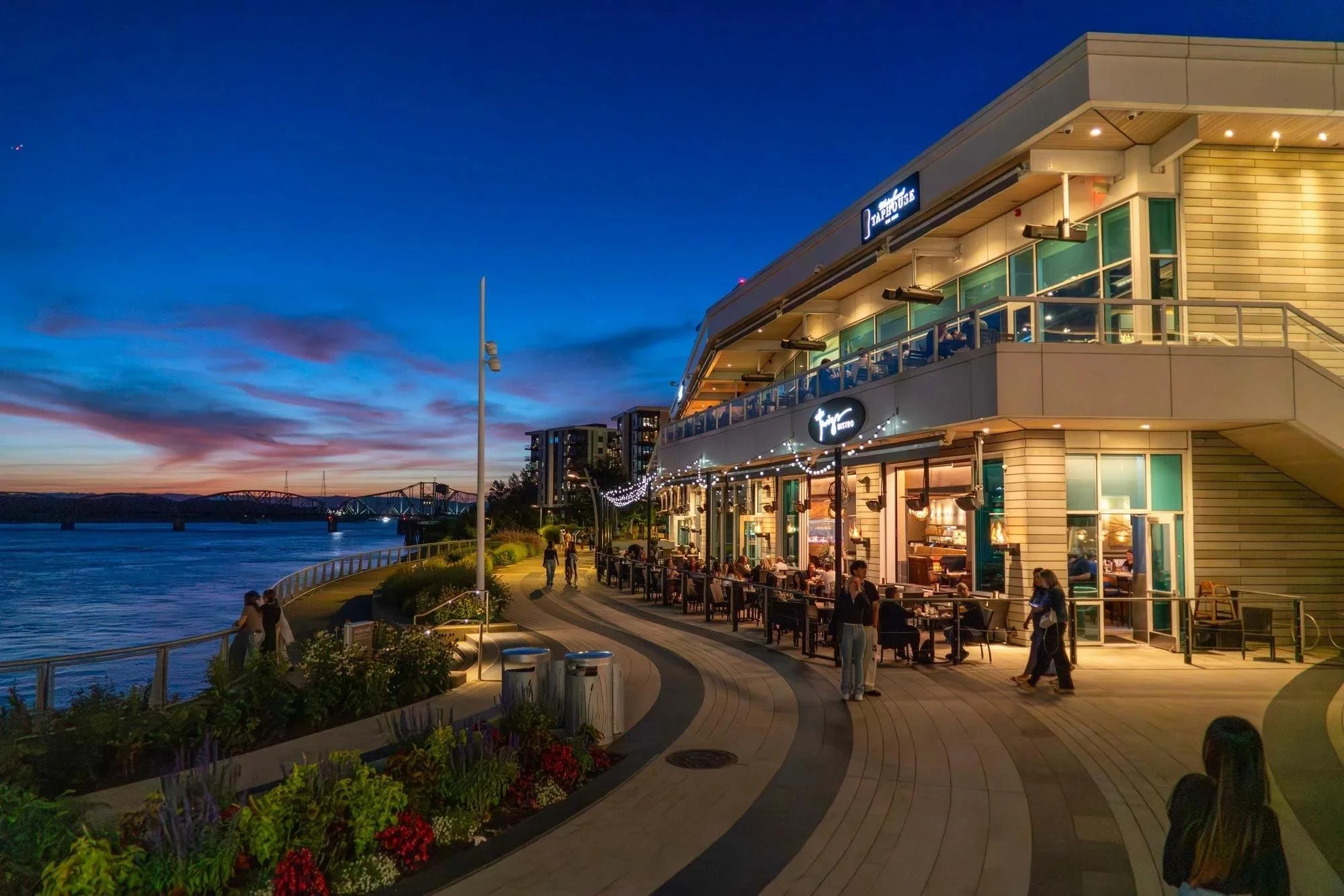
The Vancouver Waterfront has completely changed the downtown experience with restaurants, trails, new development and access to the Columbia River.
And Vancouver isn't one giant suburb. Downtown, Felida, Salmon Creek and Fisher's Landing all feel very different.
Portland Still Has the Neighborhood Factor
Portland's biggest advantage may be its collection of established neighborhoods that almost feel like their own little towns.
St. Johns. Sellwood. Alberta. Multnomah Village. Kenton. Mississippi.
If you want an older bungalow where you can walk to coffee and dinner, Portland may win.
If you'd rather have newer construction, a larger garage and a more suburban neighborhood, Vancouver may give you more options.
And if you want acreage? We're probably expanding the search beyond both cities anyway.
What About the Houses?
Portland has a much larger inventory of older homes. That can mean beautiful hardwood floors, built-ins and mature neighborhoods.
It can also mean:
“Oh look, another 1927 sewer line.”
Vancouver often gives buyers more options built within the last few decades.
Neither is better. It depends on whether original built-ins make you fall in love or immediately start calculating demolition costs.
So, Portland or Vancouver?
Start with how you actually want to live, not which side of the river you think you're supposed to choose.
Commute. Neighborhood. House style. Walkability. Taxes. Budget.
And if you're not sure?
Look at both.
I'm licensed in Oregon and Washington, so I regularly help buyers compare homes and neighborhoods on both sides of the Columbia. Sometimes they end up exactly where they expected.
Sometimes three houses into the search, they completely change their mind.
Those are usually the fun ones.